
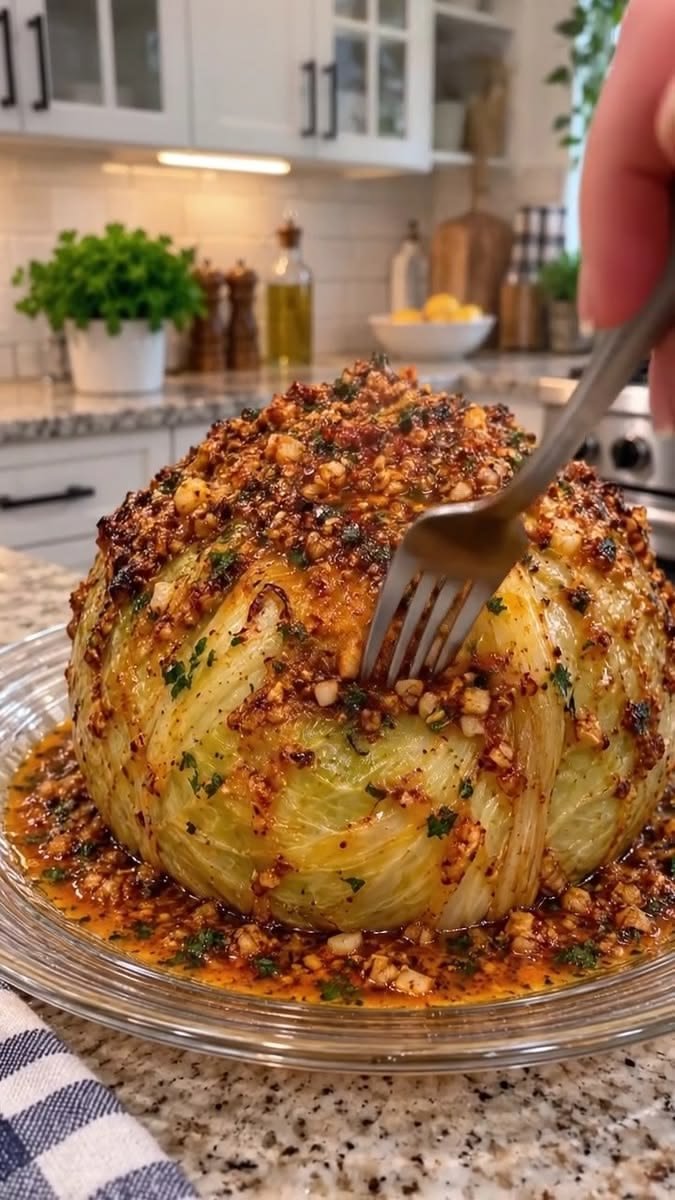
Whole Roasted Garlic Butter Cabbage
Whole roasted garlic butter cabbage is one of the most satisfying side dishes you can make at home. It transforms a humble head of cabbage into a golden, tender, deeply flavorful centerpiece that pairs beautifully with roast chicken, pork chops, steak, or a plant-based main course. Because the recipe uses only a handful of pantry staples, it is an affordable, impressive dish that works for weeknight dinners and holiday tables alike.
In this guide, you will learn why roasting cabbage whole creates such a remarkable texture, which ingredients matter most, how to prepare and cook the cabbage step by step, and how to troubleshoot common problems. You will also find serving ideas, storage tips, and answers to frequently asked questions.
Why Roast Cabbage Whole?
Cabbage is often boiled or steamed, which can leave it watery and bland. Roasting changes everything. The dry heat of the oven caramelizes the natural sugars in the leaves, creating crisp, browned edges and a sweet, nutty flavor. When you leave the head intact, the layers stay together, the interior becomes creamy and tender, and the outer leaves char just enough to add contrast.
Whole roasting also makes for a dramatic presentation. Slicing the cabbage into wedges at the table is a simple way to turn an everyday vegetable into a dish that looks like it came from a restaurant kitchen. It is an excellent choice for families, dinner parties, and anyone looking to add more vegetables to their diet without sacrificing flavor.
Key Ingredients for Whole Roasted Garlic Butter Cabbage
The success of this dish depends on a few carefully chosen ingredients. Here is what you will need:
– 1 medium green cabbage (about 2 to 2.5 pounds), with the outer leaves intact
– 4 tablespoons unsalted butter, softened or melted
– 6 to 8 cloves garlic, finely minced or grated
– 2 tablespoons olive oil
– 1 teaspoon kosher salt, plus more to taste
– 1/2 teaspoon freshly ground black pepper
– 1/2 teaspoon smoked paprika (optional, for color and depth)
– 1/4 teaspoon red pepper flakes (optional, for gentle heat)
– 1 tablespoon fresh parsley, chopped, for garnish
– 1 tablespoon lemon juice or a squeeze of lemon wedge, to brighten the finished dish
– Grated Parmesan cheese (optional, for a savory finish)
Choosing the Right Cabbage
Green cabbage is the most common choice because it holds its shape well during roasting and has a mild, slightly sweet flavor. Savoy cabbage, with its crinkled leaves, is also an excellent option and cooks a little more quickly. Avoid cabbage with split or damaged outer leaves, and look for a head that feels heavy and firm for its size. Keep the core intact so the head holds together while it roasts.
Why Garlic Butter Works
Butter adds richness and helps the cabbage brown evenly, while garlic contributes a fragrant, savory punch. Fresh garlic is strongly preferred over jarred varieties, which often taste flat or sour. For the most balanced flavor, combine melted butter with olive oil. The oil has a higher smoke point and helps prevent the butter from scorching in the oven.
Step-by-Step Instructions
Step 1: Prepare the Oven
Preheat your oven to 400 degrees Fahrenheit (200 degrees Celsius). Position a rack in the center so the cabbage cooks evenly. Line a sturdy, rimmed baking sheet with parchment paper or aluminum foil for easy cleanup, or use a cast-iron skillet for extra browning.
Step 2: Prepare the Cabbage
Remove any wilted or damaged outer leaves, but keep the sturdy green ones that protect the head. Trim the stem end just enough to lie flat, taking care not to cut out the core completely. Rinse the cabbage under cold water and pat it dry thoroughly. Excess moisture will cause steaming instead of roasting, so take a moment to dry it well.
Step 3: Make the Garlic Butter
In a small bowl, combine the softened or melted butter, olive oil, minced garlic, salt, black pepper, smoked paprika, and red pepper flakes if using. Stir until the mixture is evenly blended and fragrant. For extra flavor, let the garlic sit in the butter for about five minutes before using.
Step 4: Coat and Season the Cabbage
Use a pastry brush or a spoon to spread a generous amount of garlic butter over the outside of the cabbage, working it between the outer leaves where you can. Reserve about a quarter of the mixture for basting later. Sprinkle a light layer of salt over the surface.
Step 5: Roast
Place the cabbage cut side down if you have made a shallow cut across the base, or simply stem side down on the sheet. Roast for 30 minutes. Remove the pan, baste the cabbage with more garlic butter, then flip it carefully if desired and return it to the oven. Continue roasting for another 25 to 35 minutes, basting every 10 minutes, until the outer leaves are deeply golden and charred at the edges and a paring knife slides easily into the center. Total cooking time typically ranges from 50 to 65 minutes depending on the size of the head and your oven.
Step 6: Rest and Finish
Let the cabbage rest for about five minutes after it comes out of the oven. This allows the juices to settle and makes the head easier to slice. Brush any remaining garlic butter over the top, sprinkle with fresh parsley, add a squeeze of lemon juice, and finish with grated Parmesan if you like. Cut into wedges and serve immediately