
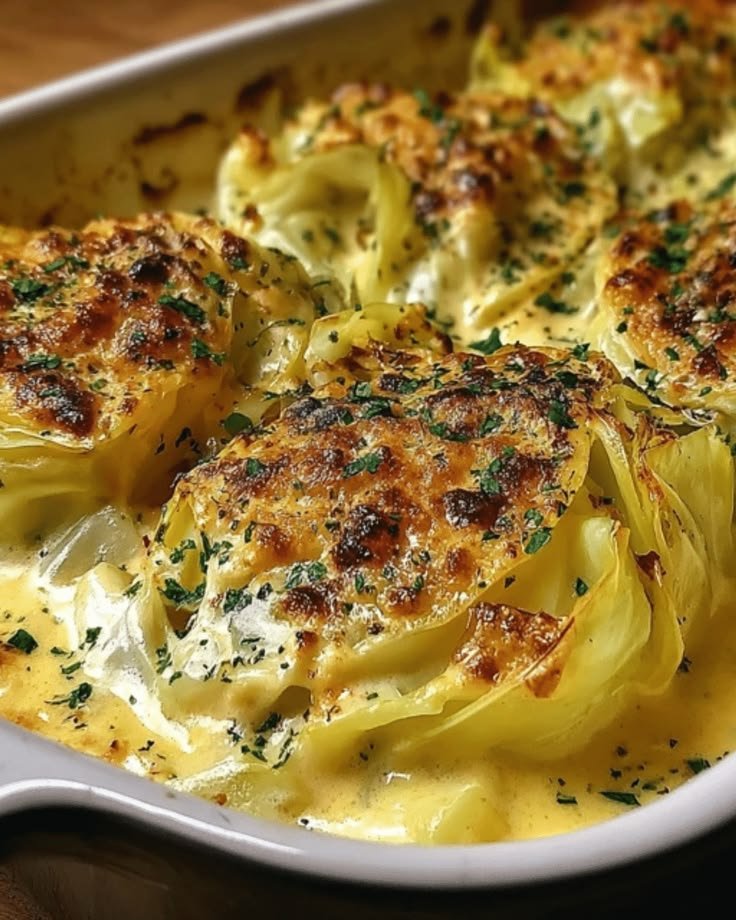
Cheesy Baked Cabbage
Cheesy baked cabbage is one of those humble side dishes that quietly steals the show at the dinner table. Tender wedges of cabbage, roasted until their edges turn golden and caramelized, then topped with a bubbling layer of melted cheese, deliver comfort food flavor with very little effort. It is affordable, nutritious, and versatile enough to pair with everything from roast chicken to weeknight pasta. In this guide, you will learn how to choose the right cabbage, how to bake it so it stays tender without turning mushy, which cheeses work best, and how to customize the recipe for your family’s taste.
Why Cheesy Baked Cabbage Works
Cabbage has a naturally mild, slightly sweet flavor when cooked, but it can taste bitter or sulfurous if it is boiled too long. Baking solves this problem. The dry heat of the oven concentrates the cabbage’s natural sugars, encouraging browning and a nutty, roasted character. Adding cheese brings richness, salt, and a satisfying texture contrast that transforms a plain vegetable into a dish people request again and again.
From a nutritional standpoint, cabbage is a budget-friendly vegetable packed with vitamin C, vitamin K, dietary fiber, and antioxidants. When paired with a moderate amount of cheese, it becomes a filling side that supports a balanced plate. For anyone searching for easy vegetable side dishes, low-cost family meals, or healthy comfort food ideas, cheesy baked cabbage checks many boxes at once.
Choosing the Right Cabbage
Not all cabbages behave the same way in the oven. The three most common varieties are green cabbage, savoy cabbage, and red cabbage.
Green cabbage is the most widely available and the best choice for beginners. It has dense, firm leaves that hold their shape during baking and develop lovely golden edges.
Savoy cabbage has crinkled, looser leaves with a more delicate flavor. It cooks faster and works well if you want a softer, more tender result. Its ruffled surface also catches cheese beautifully.
Red cabbage adds striking color and a slightly tangier taste. It can turn the cheese a purplish hue, so some cooks prefer to use it in combination with green cabbage or to pair it with sharp cheddar for contrast.
When shopping, look for a head that feels heavy for its size, with crisp, unblemished leaves. Avoid cabbages with dry, cracked outer leaves or soft spots. A medium head of about two pounds is enough to feed four to six people as a side dish.
Essential Ingredients
A basic cheesy baked cabbage recipe requires only a handful of pantry staples:
– 1 medium head green or savoy cabbage
– 3 tablespoons unsalted butter or olive oil
– 1 teaspoon kosher salt, plus more to taste
– ½ teaspoon black pepper
– ½ teaspoon garlic powder or 2 cloves minced fresh garlic
– 1 cup shredded sharp cheddar cheese
– ½ cup grated Parmesan cheese
– Optional: fresh parsley, chives, or thyme for garnish
Using freshly grated cheese rather than pre-shredded varieties makes a noticeable difference. Pre-shredded cheese often contains anti-caking agents that prevent it from melting smoothly, leading to a grainy texture on top of your cabbage.
Step-by-Step Recipe for Cheesy Baked Cabbage
Step 1: Preheat and Prepare
Preheat your oven to 425°F (220°C). Line a rimmed baking sheet with parchment paper or lightly grease it with oil. A hot oven is essential for caramelization, so do not lower the temperature.
Step 2: Cut the Cabbage
Remove any damaged outer leaves and rinse the head under cold water. Place the cabbage on a cutting board stem side down and slice it in half from top to bottom. Then cut each half into thick wedges, roughly one inch wide, keeping a bit of the core attached to each piece so the wedges hold together during baking.
Step 3: Season the Wedges
Melt the butter if using, or measure out the olive oil. Brush both sides of each wedge generously with the fat. Sprinkle with salt, pepper, and garlic powder or minced garlic. Gently work the seasoning between the leaves where possible.
Step 4: First Roast
Arrange the wedges in a single layer on the baking sheet with space between them so they roast rather than steam. Bake for 20 minutes, then carefully flip each wedge using tongs or a thin spatula. Return to the oven for another 10 to 15 minutes, until the edges are browned and the thickest part is fork-tender.
Step 5: Add the Cheese
Remove the tray from the oven and reduce the heat to 400°F if you want to melt the cheese without overcooking the cabbage. Sprinkle the cheddar and Parmesan evenly over each wedge. Return the tray to the oven for 5 to 8 minutes, or until the cheese is fully melted, bubbling, and lightly golden in spots.
Step 6: Rest and Serve
Let the cabbage rest for two to three minutes before serving. This allows the cheese to set slightly so it clings to the wedges. Garnish with chopped parsley, chives, or a pinch of smoked paprika for color and an extra layer of flavor.
Tips for Perfect Results
Avoid overcrowding the pan. Crowded cabbage releases moisture and steams instead of roasting. Use two baking sheets if necessary.
Dry the cabbage thoroughly. Excess water on the leaves will prevent browning. Pat the wedges with a paper towel after rinsing.
Use a combination of cheeses. Cheddar delivers meltiness and sharp flavor, while Parmes