
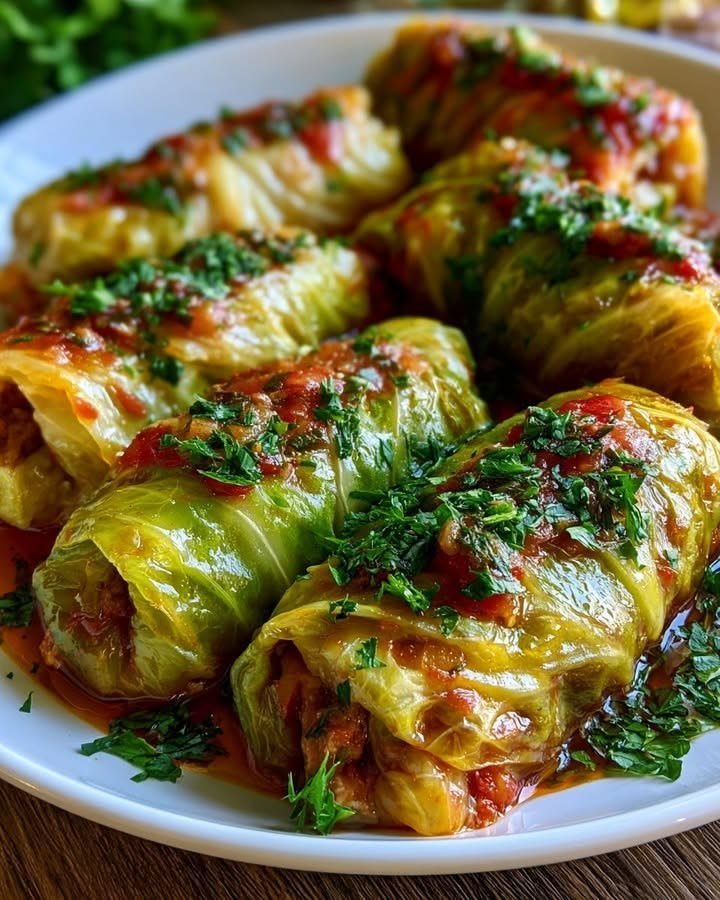
Stuffed Cabbage in Portions: A Complete Guide to Making Individual Cabbage Rolls
Stuffed cabbage in portions is one of the most comforting and satisfying home-cooked dishes you can make. Whether you call them cabbage rolls, stuffed cabbage leaves, or by their Eastern European name, these tender parcels of seasoned meat and rice wrapped in soft cabbage leaves are a favorite at family dinners, holiday tables, and meal-prep kitchens alike. Serving them in individual portions makes the dish elegant, easy to plate, and simple to store or freeze.
In this guide, you will learn how to choose the right ingredients, prepare the cabbage, assemble and roll each portion, cook them to perfection, and serve them with the best sauces and sides. You will also find tips on storage, meal prep, and common mistakes to avoid.
Why Choose Stuffed Cabbage in Portions?
Preparing stuffed cabbage as individual portions has several advantages over a single large casserole. Each roll cooks evenly, portions are easy to serve without breaking apart, and leftovers store neatly in containers. For families, individual portions help with portion control, while for entertaining they create a restaurant-style presentation.
Portioned stuffed cabbage also suits busy schedules. You can freeze rolls in batches, reheat only what you need, and build balanced weekly meals around a dish that is hearty, budget-friendly, and rich in vegetables and protein.
Ingredients You Will Need
A classic recipe for stuffed cabbage in portions serves four to six people and uses the following ingredients:
– 1 medium head of green cabbage (about 2 to 3 pounds)
– 1 pound ground beef (or a mix of beef and pork for extra flavor)
– 1/2 cup uncooked long-grain white rice (or cooked rice for a shortcut)
– 1 medium yellow onion, finely chopped
– 2 cloves garlic, minced
– 1 large egg, lightly beaten
– 1/4 cup fresh parsley, chopped
– 1 teaspoon salt and 1/2 teaspoon black pepper
– 1 teaspoon paprika for depth of flavor
– 1 can (15 ounces) tomato sauce
– 1 cup beef or vegetable broth
– 2 tablespoons brown sugar or honey for a balanced sweet-and-sour sauce
– 2 tablespoons lemon juice or apple cider vinegar
Choosing high-quality ground beef with around 15 to 20 percent fat keeps the filling juicy. For a lighter option, ground turkey or chicken works well, though you may want to add a little extra seasoning.
Step 1: Prepare the Cabbage Leaves
The key to excellent stuffed cabbage is preparing the leaves so they are soft and pliable without tearing. Start by removing the core from the head of cabbage using a sharp knife. Place the whole head in a large pot of boiling salted water for about 8 to 10 minutes, or until the outer leaves loosen and become flexible.
Remove the leaves one at a time using tongs, and set them aside to cool. As the head cools, continue peeling off leaves until you reach the smaller inner ones. Trim the thick center vein of each leaf with a paring knife so it rolls more easily. Pat the leaves dry before filling.
Alternatively, you can freeze the entire cabbage head overnight, then thaw it. The freezing process breaks down the cell walls, making the leaves soften quickly and easily.
Step 2: Make the Flavorful Filling
In a large bowl, combine the ground beef, cooked or uncooked rice, chopped onion, minced garlic, beaten egg, parsley, salt, pepper, and paprika. Mix gently with your hands until just combined. Overmixing can make the filling dense and tough.
If you are using uncooked rice, keep in mind that it will absorb moisture from the filling and sauce during cooking. Some cooks prefer to parboil the rice for ten minutes first to ensure it becomes fully tender. Adding a splash of broth to the filling can also keep the rolls moist.
Step 3: Roll Individual Portions
Place about two to three tablespoons of filling near the stem end of each cabbage leaf. Fold the sides of the leaf inward, then roll tightly from the bottom up, creating a compact parcel. The seam should face down so the roll stays closed during cooking.
For a neat, uniform presentation, aim for rolls of similar size. Smaller leaves make excellent petite portions for appetizers, while larger leaves are ideal for main-course servings. If a leaf tears, patch it with a smaller piece of cabbage or simply tuck it into the pot seam side down.
Step 4: Layer and Simmer
Spread a thin layer of tomato sauce or broth across the bottom of a large Dutch oven or heavy-bottomed pot. This prevents sticking and adds flavor. Place any torn or leftover cabbage pieces on the bottom to create a protective layer.
Arrange the rolls in tight rows, seam side down, in a single or double layer. Mix the remaining tomato sauce with the broth, brown sugar or honey, and lemon juice or vinegar. Pour this sauce evenly over the rolls until they are nearly covered.
Cover the pot and bring it to a gentle simmer over medium heat. Reduce the heat to low and cook for 60 to 75 minutes, or until the rice and meat are fully cooked and the cabbage is very tender. An internal temperature of 160 degrees Fahrenheit for the meat is a good indicator of doneness. Baste the rolls with sauce occasionally to keep them moist.
You can also bake the rolls in a preheated oven at 350 degrees Fahrenheit, covered, for about 60 to 90 minutes. Baking produces a gent